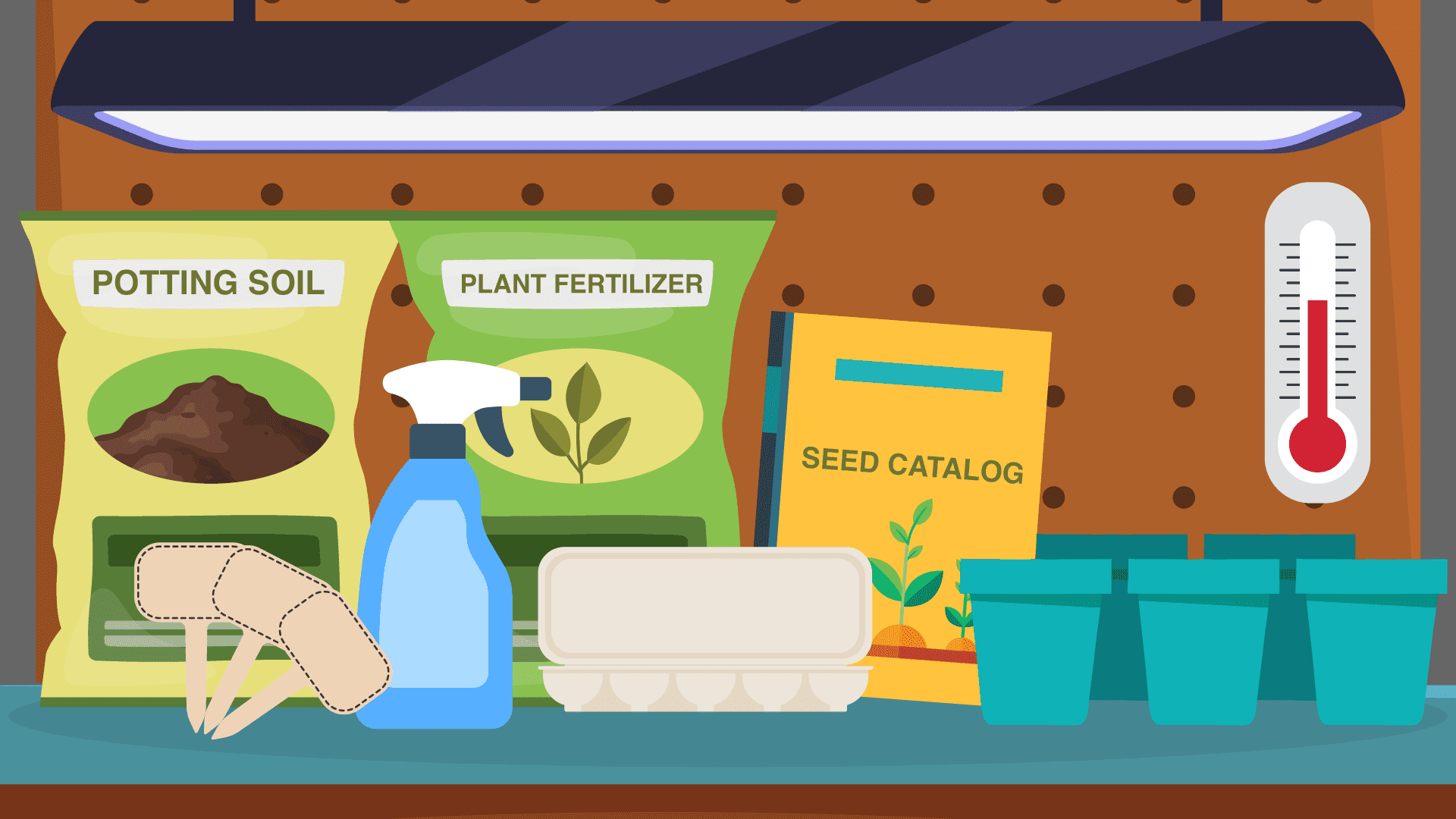
When you live in a state with a short growing season, learning how to start seeds indoors is the key to a fruitful garden. Click on each icon in the image below to learn more about the needs of starting seeds.
SOIL
Don’t use garden soil - find a quality seed-starting potting mix
Potting mixes are sterile, which means they’re weed and disease-free
They’re also lightweight and are better at retaining moisture
WARMTH
Seeds germinate better when the soil is at or above 70 degrees
Keep seed trays in a consistently warm place
Avoid windows as they can let in a draft and create a too-cool environment
Consider purchasing a seed starting mat or heat source to place under your seeds
WATER
Seeds need to be kept consistently moist; soil shouldn’t be too dry or too wet
Use a spray bottle to mist everyday
Watering cans are okay, but they might push the seeds to the surface or wash soil away
Water should be at room temperature
LIGHT
Seeds will need between 12-16 hours of light per day
Think quantity over quality
You can place a fluorescent light over your seeds:
Keep light between 2-4 inches above the plants
CONTAINERS (PLASTIC)
Can be reused
Easy to fill and move around
Maximizes plant density
May cause root-bound plants and transplanting shock
Not eco-friendly
CONTAINER (EGG CARTON)
Eco-friendly
Works best for keeping seeds in individual spaces
Less transplanting shock
Containers may be costly due to prices of eggs
Less plant density
Seedlings may become root bound
LABELS
Use a label for each container, including:
The variety of plant
Date sown
The date will help you determine if the seed is viable or not
You can use everyday items to make your own labels, like popsicle sticks or plastic spoons
SEEDS
Look for reliable seed sources, such as a local greenhouse
Leftover seeds can be used the following year, but may not be as viable
FERTILIZER
Seeds have enough food until true leaves appear
Once leaves appear, they need fertilizer
Soluble fertilizers at half-strength are best, look for a 20:20:20 blend
Monitor the color of your plants:
If they are pale, they need more fertilizer
If they are browning on the edges, they may be burning